Beyond Emergency Response: How Utility Drone Programs Are Powering Faster, More Resilient Grid Recovery
Published on October 26, 2026
Utility drone programs can give restoration teams earlier visibility into storm damage and hazardous conditions. Their value during an emergency depends on preparation: equipment that is ready, teams that know how to use it, and a clear path for getting information to the people directing restoration.
At the same time, utilities are facing increasing pressure to restore power faster, improve situational awareness through post-storm drone inspections and damage assessment, and keep crews safer in damaged environments.
For many utilities, there’s a gap between how their drone programs operate today and what they could make possible. Strengthening an existing program’s equipment readiness, training, and coordination can make drones a more consistent emergency-response tool and support broader grid resilience.
Leading utilities are integrating drones into a fully operational grid-resilience strategy, with standardized equipment working alongside strategic planning, engaged stakeholders, and repeatable processes to guide restoration decisions.
What’s Raising the Stakes for Utility Emergency Response?
More intense storms, wildfires, and other extreme weather events are increasingly affecting energy infrastructure and operations. The Fifth National Climate Assessment reports that the average number of major U.S. power outages increased roughly 64% from 2011–2021 compared with 2000–2010. That growing risk is putting more pressure on utilities to prepare for and respond to major events.
Visibility can be limited in the first hours after an event. Before restoration crews can deploy efficiently and safely, they need to know where damage occurred, how severe it is, and what conditions they may encounter. The speed and accuracy of the initial damage assessment are increasingly important to restoration decisions and timelines.
For utilities across the Gulf Coast and Southeast, where hurricane response is a recurring operational reality, aerial assessment can provide earlier visibility into damaged infrastructure and hazardous environments. That insight can help teams prioritize crews and resources and accelerate restoration. Faster restoration also supports outage duration and reliability performance, key measures for utilities and their regulators.
What Limits Traditional Approaches to Utility Storm Damage Assessment? Utilities have traditionally relied on ground crews, manned aircraft, and increasingly drones to assess post-storm damage to critical infrastructure. Each can play a useful role in emergency response, but each also has limitations when utilities need to assess damage quickly, safely, and at scale.
For drones, technology capabilities and operating conditions matter. So does whether the utility has the equipment, trained teams, and operational structure to support a coordinated response.
1. Ground-based inspections take time and depend on access.
Manual patrols can be personnel- and time-intensive, particularly when crews need to cover miles of transmission or distribution infrastructure.
Time spent walking or driving a corridor can delay the information restoration crews need. Ground-based inspections can also be challenging when an entire region needs to be assessed simultaneously.
Damaged roads, flooding, downed trees, and other hazardous conditions may also limit access to affected areas.
2. Manned aircraft inspections can be costly and limited.
Helicopters and other manned aircraft can assess larger areas more quickly than ground crews. But they can be constrained by weather and operating costs.
Availability can also be an issue during widespread events, when aircraft may be supporting multiple response and recovery needs.
3. Ad hoc drone programs can be complex to scale.
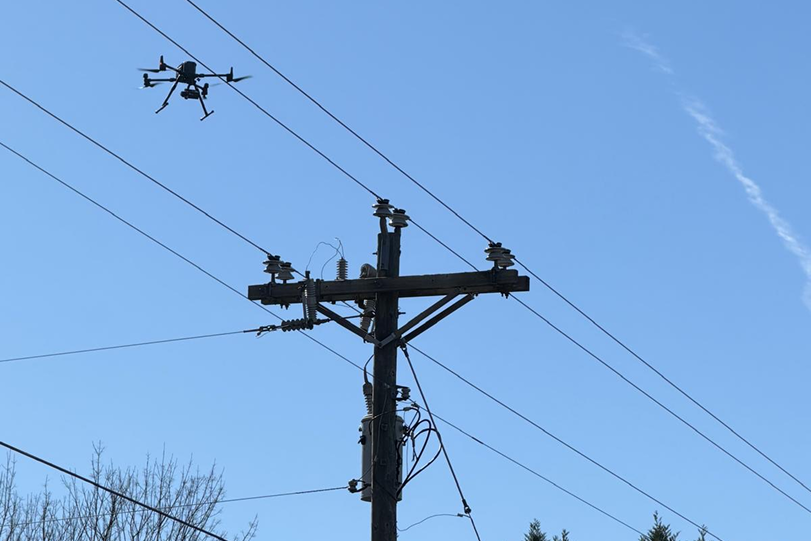
Drones used for storm damage assessment give teams another way to assess damaged or hard-to-reach utility infrastructure without sending crews in first. But without standardized equipment, trained teams, deployment plans, and established data workflows, utility drone programs can be difficult to deploy consistently across a large service territory when an emergency occurs.
The opportunity, then, isn’t only to add drones to the emergency response toolbox. It’s to strengthen the structure that allows utilities to deploy them quickly, consistently, and at scale while turning the data they capture into information restoration teams can use.
What Do Structured Utility Disaster Preparedness Drone Programs Look Like?
A structured utility disaster preparedness drone program is more than aircraft and pilots ready to respond after a storm. It puts the right planning, people, and processes in place ahead of time. The result is the ability to deploy consistently when an emergency occurs and use drones for faster storm damage assessment and grid recovery. Just as important, utilities need to maintain and test those capabilities between deployments.
Ready-to-Deploy Assets
Equipment is positioned based on known risk zones and built into the broader storm response plan, not pulled together after the fact. Routine maintenance and readiness checks help ensure the fleet and supporting equipment are ready when they’re needed.
A Standardized Fleet and Trained Teams
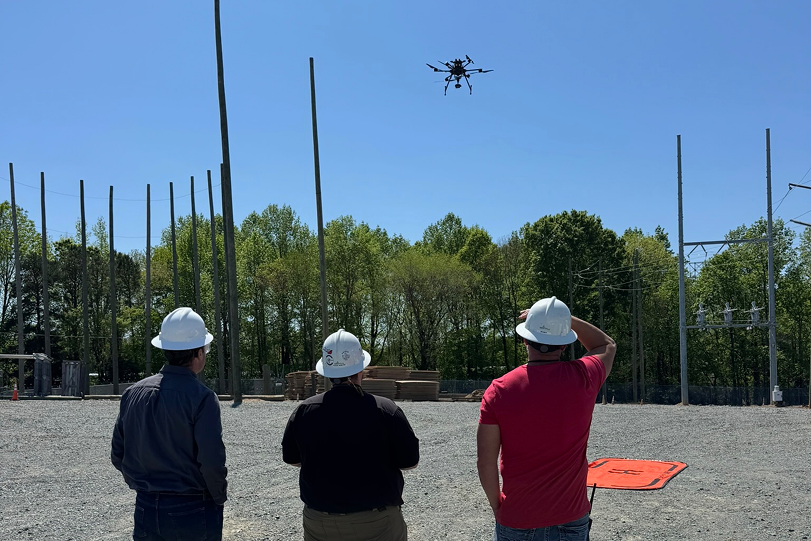
Consistent platforms across regions can reduce complexity during a coordinated response. Teams should be trained before an event and maintain the certifications and proficiency required to carry out their assigned missions.
Integration With Emergency Management Systems
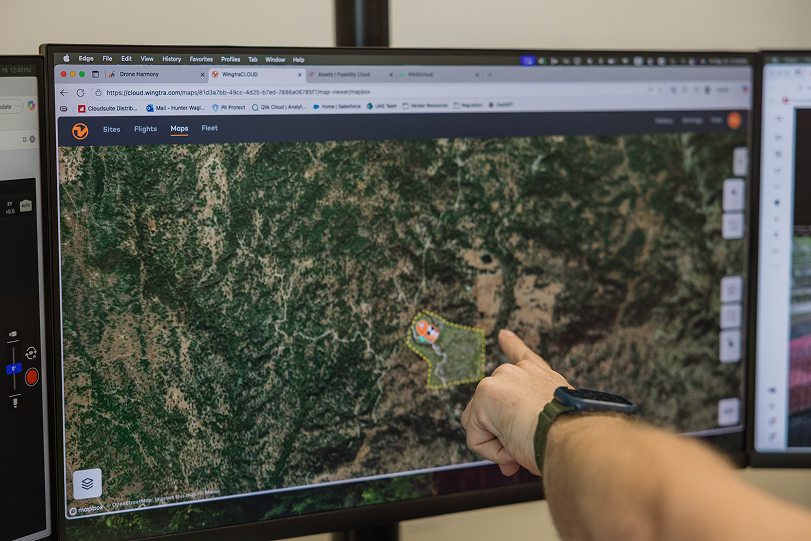
Drone operations should function as part of the broader emergency response, with connections to GIS platforms, outage management systems, and incident command workflows. Utilities should also establish and regularly review procedures for operating safely in post-storm airspace, including coordination around temporary flight restrictions and other response aircraft.
Rapid Data Capture That Turns into Actionable Insight
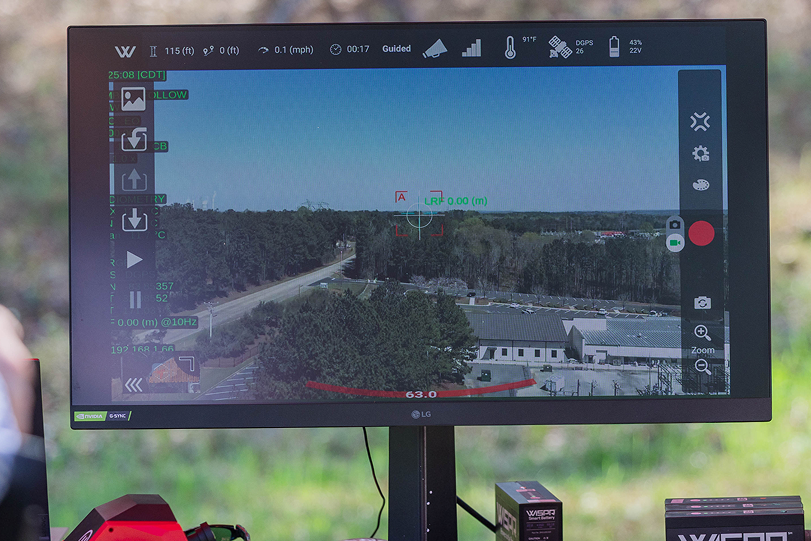
Post-storm drone inspections can help utilities assess damage across critical infrastructure faster and over a wider area. This gives response teams a clearer picture of the extent and severity of damage without waiting to inspect every asset from the ground.
What Do Structured Drone Programs Enable During Storm Response?
Structured utility drone programs provide a more consistent, scalable way to conduct storm response operations. With a formal structure in place, utilities can extend their capabilities in several important ways:
Efficient Post-Event Damage Assessment: A coordinated drone response gives restoration teams a clearer picture of affected assets and conditions. These insights can shorten the time required to assess widespread infrastructure damage.
Safer Inspections in Hazardous Conditions: Flooding, downed lines, unstable terrain, and other post-storm hazards can make initial inspections risky for field crews. Drones can assess site conditions and hard-to-access infrastructure before crews enter an area, providing an initial view of potential hazards.
Coordinated Deployment Across Territories: Standardized procedures and data workflows make it easier to coordinate multiple teams and scale utility drone operations across assets and service territories as response needs grow.
Foundation for BVLOS and Automation: A structured drone program can better position utilities for beyond visual line of sight (BVLOS) operations and greater automation, subject to applicable operating requirements and authorizations.
Together, these capabilities expand the role of drones beyond ad hoc emergency deployments. They give utilities a more repeatable approach to conducting drone operations during storms and other emergencies.
How Can Utilities Strengthen Their Drone Storm Response?
Strengthening a new or existing utility drone program requires a deliberate approach. Gresco has served the utility industry since 1960. Drawing on that accumulated utility knowledge, Gresco UAS helps utilities evaluate and select equipment, train teams on their technology, and maintain fleet readiness through product and lifecycle support.
Review your plan. Establish or revisit the foundation of your drone program by identifying the owners, high-impact use cases, hardware, ROI, and operational requirements needed to support it long-term.
Organize for scale. Develop consistent standard operating procedures (SOPs) for mission planning, utility emergency response, data management, equipment readiness, pilot responsibilities, and airspace risk.
Maintain a capable flight team. Go beyond Part 107 certification by developing the technical skills, real-world flight proficiency, and mission-specific workflow knowledge teams need for safe operations and reliable data capture. Training on existing equipment helps teams get more value from the technology they already have.
Streamline asset management. Centralize visibility into aircraft and battery health, pilot credentials, compliance documentation, maintenance, and service needs to help keep the fleet ready to deploy.
Expand with purpose. Start with defined missions, demonstrate their impact, and use what teams learn to refine SOPs and expand into additional use cases, including post-storm drone inspections and damage assessment.
Optimize over time. Continue evaluating pilots, assets, data and workflow integration, training, technology, ROI, and program performance to strengthen operational maturity as needs evolve.
For utility storm response, this foundation means the program doesn’t have to be assembled when an event occurs. The plan, people, and processes are already in place to move into action, helping make drones a repeatable capability for disaster response and grid resilience.
How Do Structured Utility Drone Programs Support Faster, More Resilient Grid Recovery?
The operational capabilities of a structured utility drone program can translate into measurable benefits for grid recovery. When utilities build drones into operations before an emergency or storm, they can improve restoration efforts in four important ways:
Faster Restoration Times: Earlier damage information can help utilities prioritize repair work and deploy crews where they are needed, shortening the path from initial assessment to restoration.
Improved Safety Outcomes: By identifying potential hazards before crews arrive, utilities can make more informed decisions about field deployment. Another benefit is limiting unnecessary exposure to dangerous conditions.
Better Reliability Performance: Faster restoration can help utilities limit outage duration and maintain stronger reliability performance following major events.
More Predictable Recovery Operations: With the necessary resources and protocols already established, utilities can reduce uncertainty and improve coordination during each event, supporting more predictable drone disaster response efforts.
These outcomes demonstrate the larger role structured drone programs can play in faster grid recovery and long-term grid resilience.
Is Your Utility Drone Program Ready for the Next Emergency?
The time to determine whether your utility drone program is ready for emergency deployment is before the next major event. A structured program gives utilities a more consistent, repeatable way to respond when it matters most.
Whether your utility is equipping a new program or strengthening an established fleet, Gresco UAS can help with technology selection, equipment demonstrations, training, maintenance, and lifecycle support. Our team draws on Gresco’s decades of utility industry experience to help customers evaluate equipment for their use cases and get more value from the technology they already own.
.png)