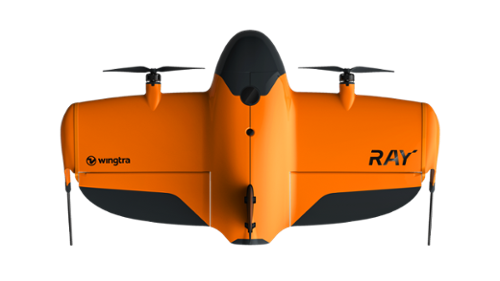
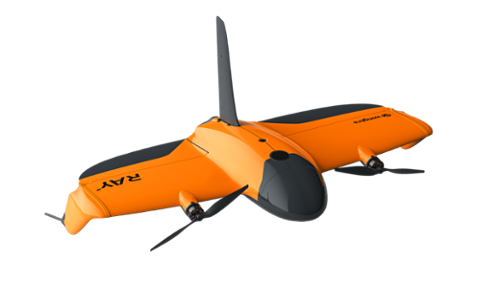
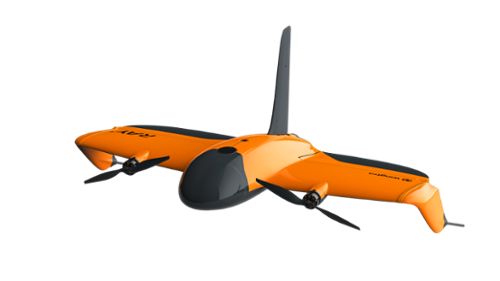
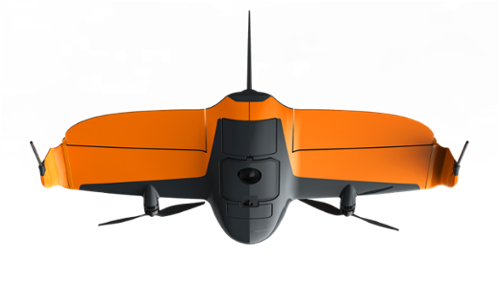
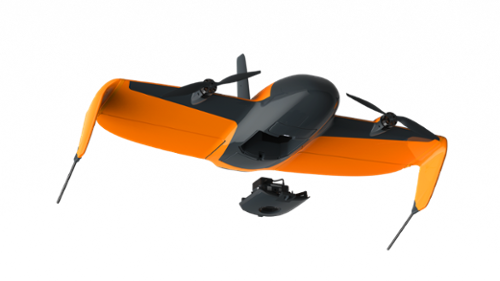
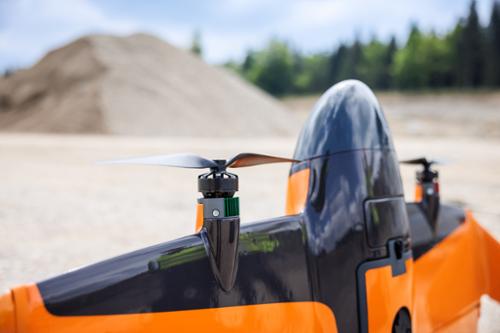
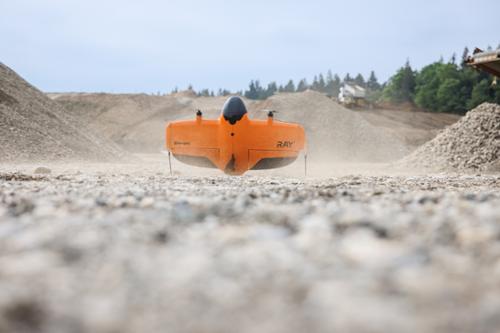
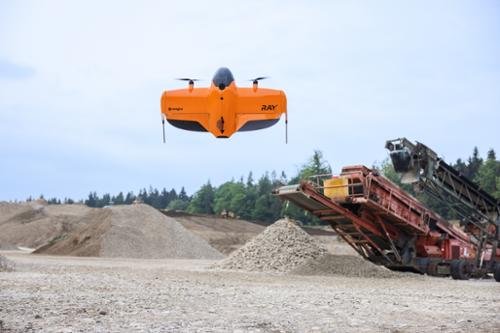
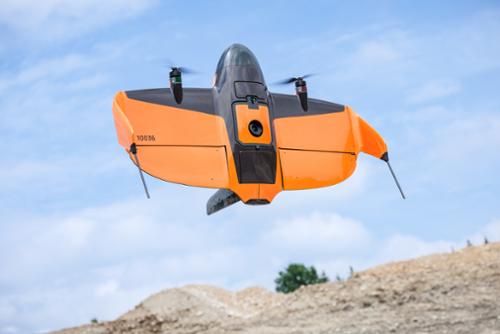
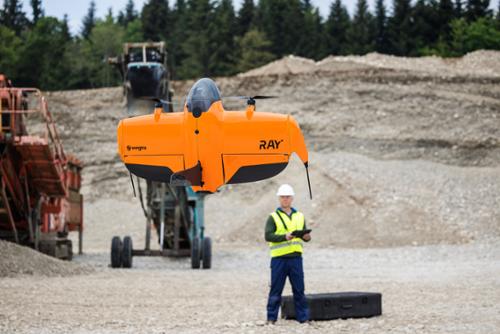
Introducing theWingtraRAY, a professional-grade drone engineered for surveyors, offering a reliable and efficient solution for both urban and rural environments. With a modular design supporting six versatile payloads, it enables close-up inspections with millimeter-level resolution as well as efficient mapping of large-scale areas. The drone is capable of covering up to 1360 acres per flight and mapping 100 hectares in just 10 minutes, making it one of the fastest tools in the industry for survey-grade results.
Designed with safety and operational ease in mind, WingtraRAY includes advanced features such as obstacle avoidance, a parachute add-on for operations over people (OOP), backup batteries, and dual telemetry (radio and LTE). Its adaptive flight speed, high wind resistance, and end-to-end workflow—from mission planning to CAD and GIS-ready outputs—make it a comprehensive solution for professionals seeking speed, accuracy, and reliability in aerial surveying.
Fast and cost-effective surveys
1360 acres per flight
Adaptive speed
End-to-end workflow
Fly with peace of mind anywhere
Parachute for OOP
Obstacle avoidance
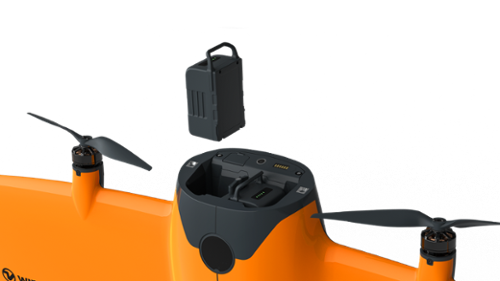
Backup batteries
Dual telemetry
Take on more with one single tool
Survey urban and rural environments
Six versatile payloads
WingtraRAY is designed to ensure successful aerial survey missions on the first flight, whether operating in dense urban areas or wide rural landscapes. Its modular, all-in-one design supports a range of applications, from millimeter-level inspections to large-scale mapping, enabling users to handle diverse projects with a single platform.
Reliable Performance:
Delivers accurate results on the first attempt in both urban and rural settings.
Efficient Operation:
Minimizes turnaround time and reduces operational costs.
Versatile Utility:
Supports detailed inspections and large-area surveys, allowing users to serve more clients with one tool.
Flight time, coverage and job time
WingtraRAY’s maximum tested flight time is 59 minutes. However, the flight time of any drone is influenced by many factors, so it will not be uniform across different missions. In any case, coverage and job time are determined by many factors, like payload weight, and flight speed.
Payload Using a heavier payload reduces flight time. For example, when switching from the MAP61 payload to the heavier LIDAR sensor, the flight time reduces from 59 mn to 45 mn.
Transition height Because the WingtraRAY uses significantly more energy while hovering, the transition altitude affects flight time. A higher transition altitude will result in a reduced flight time.
Altitude above sea level (ASL) As the air gets thinner with increasing altitude above sea level, drone flight time is reduced. At the same time, WingtraRAY will fly faster in high altitudes, which means that the coverage is only marginally reduced. *
Wind In stronger winds, drones consume more energy while flying and landing, which means missions will end up with shorter flight times.
Job time
It‘s important to note that fast job time does not depend on more flight time like it is often marketed. Because your job time actually depends on how fast you get your data on any specific area. E.g., compared to multicopters, WingtraRAY captures data 11x faster. And compared to most fixed-wings, it‘s twice as fast. The right drone, payload and settings will get your data faster, and faster means less flight time.
Coverage
What matters more than flight time is coverage, i.e., how much area you can cover in a single flight. Considering this, it is important to choose your payload based on the goal. What do you need? Moreover, how do you balance the precision level and capture speed to get the accuracy you need for the analytics you/your client plans to run? For example, The INSPECT payload offers mm-level detail, while MAP61 maximizes coverage for fewer images and less processing time.
WingtraRay Key Features:
Versatile Applications: Supports urban and rural surveys with six payload options
High Efficiency:
Covers 1360 acres (550 ha) per flight
Maps 100 hectares (250 acres) in 10 minutes*
Advanced Safety:
Parachute option available for an added level of precaution
Obstacle avoidance
Backup batteries
Dual telemetry (2.5 GHz radio up to 10 km and LTE unlimited range)
Flight Performance:
Adaptive speed: 36–49 mph (16–22 m/s)
Wind resistance: 40 mph gusts, 27 mph sustained
Precision:
Best resolution: 0.1 in/px (2.5 mm/px)**
Absolute accuracy: 0.1 ft (3 cm)***
End-to-End Workflow:
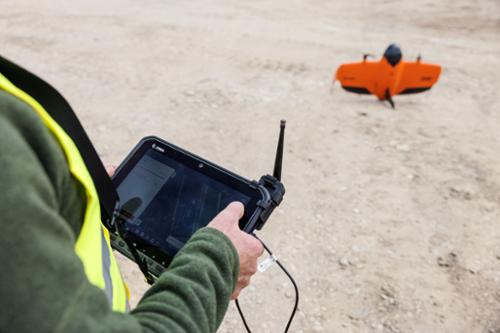
Plan missions, capture data, and process outputs in a connected toolchain
Payload Capacity: 2.75 lb (1.25 kg)
Customer Offer: 10% off WingtraRAY and 25% off MAP 61 payload for existing WingtraONE customers (valid until Sept 15, 2025)